进程和线程的区别
根本区别:进程是操作系统分配资源的最小单位,线程是任务调动和执行的最小单位。
在开销方面:每个进程都有独立的代码和数据空间,程序切换会有较大的开销。线程之间共享代码和数据,每个线程都有自己独立的栈和调度器,线程之间的切换的开销较小。
所处环境:一个操作系统中可以运行多个进程,一个进程中有多个线程同时执行。
内存分配方面:系统在运行时会为每个进程分配内存,系统不会单独为每个线程分配内存。
包含关系:创建进程时系统会自动创建一个主线程由主线程完成,进程中有多线程时,由多线程共同执行完成。
多线程的创建和常见方法
1、多线程的创建
1、通过创建类继承Thread来调用
1
2
3
4
5
6
7
8
9
10
11
12
|
static class MyThread extends Thread{
@Override
public void run() {
System.out.println("qewrwerwerw");
}
}
public static void main(String[] args) {
Thread t=new MyThread();
t.start();
}
|
2、通过Thread匿名内部类进行调用
1
2
3
4
5
6
7
8
9
| public static void main(String[] args) {
Thread t=new Thread(){
@Override
public void run() {
System.out.println("wefwefwef");
}
};
t.start();
}
|
3、通过创建类实现Runnable接口实现
1
2
3
4
5
6
7
8
9
10
11
| static class MyThread implements Runnable{
@Override
public void run() {
System.out.println("awetqeragearga");
}
}
public static void main(String[] args) {
Thread t=new Thread(new MyThread());
t.start();
}
|
4、通过Runnable实现匿名内部类调用实现
1
2
3
4
5
6
7
8
9
10
| public static void main(String[] args) {
Runnable runnable=new Runnable() {
@Override
public void run() {
System.out.println("w3rqetqwetqw");
}
};
Thread r=new Thread(runnable);
r.start();
}
|
5、通过lambad表达式调用
1
2
3
4
| public static void main(String[] args) {
Thread t=new Thread(()->System.out.println("asdasfasfasfas"));
t.start();
}
|
2、多线程的常用方法
2.1、多线程的构造方法
| 方法 |
解释 |
| Thread() |
创建线程对象 |
| Thread(Runnable target) |
使用Runnable类型创建对象 |
| Thread(String name) |
创建线程对象并命名 |
| Thread(Runnable target,String name) |
使用Runnable类型创建对象并命名 |
例:
1
2
3
4
5
6
7
8
9
10
11
12
13
14
15
| public static void main(String[] args) {
Thread t=new Thread("我是你爸爸"){
@Override
public void run() {
System.out.println("你好");
while (true){
}
}
};
t.start();
while(true){
}
}
|
2.2、线程的常见属性
| 属性 |
获取方法 |
| ID |
getId() |
| 名称 |
getName() |
| 状态 |
getState() |
| 优先级 |
getPriority() |
| 是否后台线程 |
isDaemon() |
| 是否存活 |
isAlive() |
| 是否被中断 |
isInterrupted() |
2.3、中断程序
1)让线程run执行(比较温和)
1
2
3
4
5
6
7
8
9
10
11
12
13
14
15
16
17
18
19
20
21
22
| private static boolean cread=false;
public static void main(String[] args) throws InterruptedException {
Thread t=new Thread(){
@Override
public void run() {
while(!cread){
System.out.println("转账中");
try {
Thread.sleep(500);
} catch (InterruptedException e) {
e.printStackTrace();
}
}
}
};
t.start();
Thread.sleep(2000);
System.out.println("有内鬼终止交易");
cread=true;
}
|
2)调用线程的interrupt方法来(比较激烈)
1
2
3
4
5
6
7
8
9
10
11
12
13
14
15
16
17
18
19
20
21
22
| public static void main(String[] args) throws InterruptedException {
Thread t=new Thread(){
@Override
public void run() {
while(!Thread.currentThread().isInterrupted()){
System.out.println("转账中");
try {
Thread.sleep(500);
} catch (InterruptedException e) {
e.printStackTrace();
}
}
System.out.println("转账被终止");
}
};
t.start();
Thread.sleep(2000);
System.out.println("有内鬼终止交易");
t.interrupt();
}
|
Thread.interrupted()判断当前线程中断标志被设置–清除中断
Thread.currentThread().isInterrupted()判断指定线程的中断标志–不清除中断标志
2.4、线程的等待和休眠
线程之间是并发执行的
线程的等待:
我们可以通过join方法来阻塞线程,join为了控制线程结束的先后顺序。
1
2
3
4
5
6
7
8
9
10
11
12
13
14
15
16
17
18
19
20
21
22
23
24
25
26
27
28
29
30
31
32
33
34
| public static void main(String[] args) throws InterruptedException {
Thread t1=new Thread(){
@Override
public void run() {
for(int i=0;i<3;i++){
try {
Thread.sleep(1000);
} catch (InterruptedException e) {
e.printStackTrace();
}
System.out.println("我在执行t1");
}
}
};
Thread t2=new Thread(){
@Override
public void run() {
for(int i=0;i<3;i++){
try {
Thread.sleep(1000);
} catch (InterruptedException e) {
e.printStackTrace();
}
System.out.println("我在执行t2");
}
}
};
t2.start();
t1.start();
t2.join();
t1.join();
}
|
当两个线程执行完成之后,主线程才会继续向下执行,我们可以通过这种方法来获取时间。
线程的休眠 :
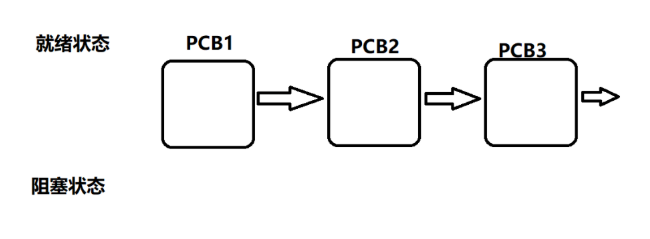
在内核态中线程分为就绪队列和阻塞队列,当正常运行时,线程在就绪队伍排队执行,当出现sleep、join、wait、锁时线程会放入阻塞队伍,当通过恢复条件时会在进入就绪队伍
2.5、线程状态
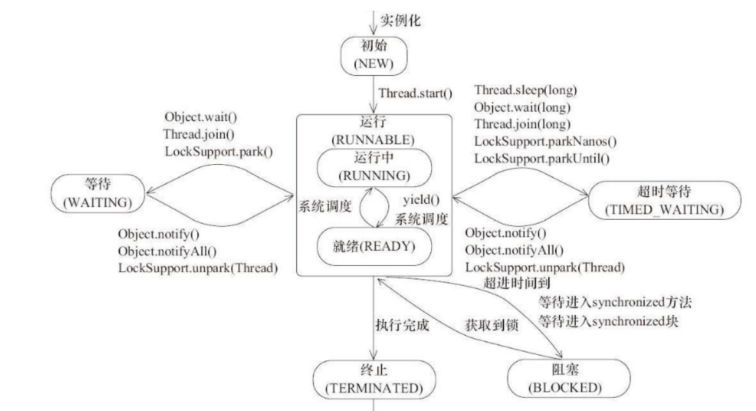
| NEW |
创建对象,没有PCB,布置了任务但是还没开始执行 |
| RUNNABLE |
就绪状态当前线程在CPU上执行或者准备好随时上CPU,通过就绪队列来维护 |
| BLOCKED |
阻塞状态,锁 |
| WAITING |
阻塞状态,wait |
| TIMED_WAITING |
阻塞状态,sleep |
| TERMINATED |
内核中的线程结束了,但是代码中的Thread对象还在 |
isAlive线程存活,除了NEW和TERMINATED之外,其他状态都表示线程存活。
线程的安全问题
线程不安全:多线程在并发执行某个代码时,产生了逻辑上的错误,就是线程不安全。
线程安全:多线程在并发执行过程中,没有产生逻辑上的错误,就是线程安全。
1、线程不安全的原因是什么?
1)线程是抢占式执行的
线程之间的调度完全由内核负责,线程之间的执行过程用户也不能干预。
2)自增操作不是原子性的
我们把自增操作分为三部分
load 把内存中的数据读取到CPU
incr 在CPU中把数据加1
save 把计算完成的结果放入内存中
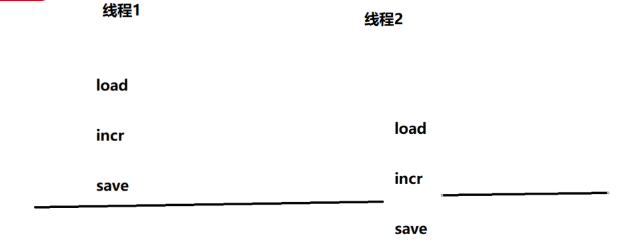
当线程一和线程二并行执行的时候增加了两次但是结果返回1,就出现了线程不安全的情况。
3)多个线程尝试修改同一个变量
如果一个线程修改一个变量,线程安全
如果多个线程读取一个变量,线程安全
如果多个线程尝试修改不同变量,线程安全
4)内存可见性导致的线程安全问题
5)指令重排序
java在编译代码时,会针对指令进行优化、调整指令的输出顺序,在原有逻辑不变的情况下,提高算法的运行速度。
2如何解决线程不安全问题
如果是抢占式执行解决不了
对于自增操作我们可以采用加锁的方式来让线程变得安全
多线程同时修改同一个变量,这个想要看具体要求
1
2
3
4
5
6
7
8
9
10
11
12
13
14
15
16
17
18
19
20
21
22
23
24
25
26
27
28
29
30
31
32
33
34
| public class TreadDome {
static class Test{
public int count=0;
public void add(){
count++;
}
}
public static void main(String[] args) throws InterruptedException {
Test t=new Test();
Thread t1=new Thread(){
@Override
public void run() {
for(int i=0;i<5000;i++){
t.add();
}
}
};
t1.start();
Thread t2=new Thread(){
@Override
public void run() {
for(int i=0;i<5000;i++){
t.add();
}
}
};
t2.start();
t1.join();
t2.join();
System.out.println(t.count);
}
}
|
注意:前置++ 后置++ 前置– 后置– += -= *= /=····等操作都不是原子性的。
直接赋值操作= 如果是针对内置类来说,一般是原子的,如果是针对引用类型来说不一定。
锁–synchronized 关键字
锁的特点:锁是具有互斥性,同线程只能有一个获取到锁。其他线程如果想要获取锁就会发生阻塞,直到获取锁的线程结束其他线程才能继续竞争锁。
在上述代码中我们加入:
1
2
3
| synchronized public void add(){
count++;
}
|
我们就会发现代码运行正常了,线程安全了。
这个时候的synchronized就是在针对t这个对象来加锁,进入add方法内部,就把加锁状态设为true,退出方法时把状态设置为false。
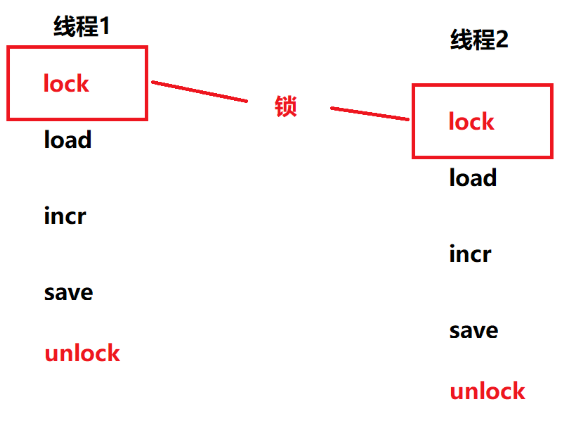
我们加上锁之后就会把自增操作变成原子性的,这样就实现了线程的安全。
synchronized的几种常用方法:
1、加到普通方法前,表示锁this
2、加到静态方法前,表示锁当前类的类对象
3、加到某个代码块之前,显示指定给某个对象加锁
1
2
3
4
5
6
7
8
9
10
11
12
13
14
15
16
17
18
19
20
21
22
23
24
25
26
27
28
29
30
31
32
| public static void main(String[] args) throws InterruptedException {
Object object=new Object();
Thread t1=new Thread(){
@Override
public void run() {
Scanner scanner=new Scanner(System.in);
synchronized (object){
System.out.println("请输入一个数");
int num=scanner.nextInt();
System.out.println("num="+num);
}
}
};
Thread t2=new Thread(){
@Override
public void run() {
while(true){
synchronized (object){
System.out.println("线程2");
try {
Thread.sleep(2000);
} catch (InterruptedException e) {
e.printStackTrace();
}
}
}
}
};
t1.start();
t2.start();
}
|
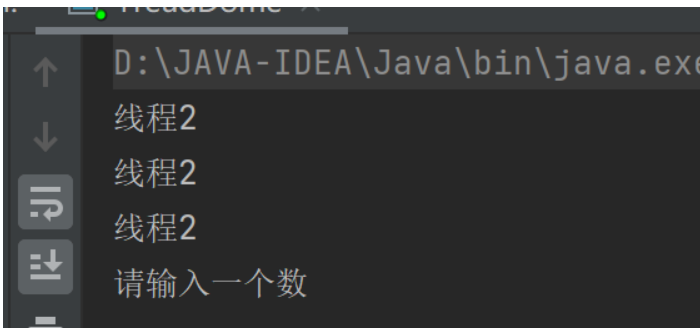
线程就会停止,发生阻塞。
1
2
3
| synchronized (object01.getClass()){}
synchronized (object02.getClass()){}
|
getClass()方法调用的是这个类的类对象,所以也会发生互斥。
扩展:
如果有一个线程一直占用锁的情况发生就会出现锁死的情况,一旦锁死之后解不开,需要进行重启。
如果对锁死感兴趣可以去了解一下哲学家就餐问题。
| stringBuffer |
Vector |
HashTable |
内部加上了锁线程安全 |
| StringBuilder |
ArrayList |
HashMap |
在单线程中可以使用,效率更高 |
volatile 关键字的作用和用法
当我们尝试使用两个线程,通过其中一个线程去进行读取操作,一个线程进行写入操作时
1
2
3
4
5
6
7
8
9
10
11
12
13
14
15
16
17
18
19
20
21
22
23
24
25
26
27
28
|
public class TreadDome01 {
    static class Counter{
        public int flag=0;
    }
    public static void main(String[] args) {
        Counter counter=new Counter();
        Thread t1=new Thread(){
            @Override
            public void run() {
                while(counter.flag==0){

                }
            }
        };
        t1.start();

        Thread t2=new Thread(){
            @Override
            public void run() {
                Scanner scanner=new Scanner(System.in);
                System.out.println("请输入一个整数:");
                counter.flag=scanner.nextInt();
            }
        };
        t2.start();
    }
}
|
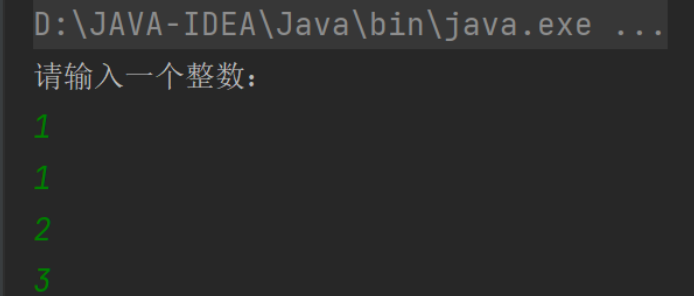
我们会发现代码运行的结果和我们想的不太一样。
这是因为在进行比较的时候while(counter.flag==0),我们先从内存中读取到flag的值到cpu中,在cpu中比较这个值和0的相等关系,由于读取cpu的速度远大于读取内存的速度,在同一个线程中flag的值没有改变,编译器就会优化这个代码,后续的判断都在cpu上进行,而不是从内存中读取flag这个值。
1
2
3
| static class Counter{
public volatile int flag=0;
}
|
当我们加入volatile时,读取时我们就会在内存上读取到cpu中进行比较,
volatile的作用是:保持内存的可见性。
synchronized和volatile的区别
|
区别 |
| synchronized |
一般是两个线程都进行写入操作 |
| volatile |
一般是两个线程,一个线程写入,一个线程读出 |
对象的等待集
为什么会有对象的等待集,这是因为抢占式执行会出现问题,当一个线程重复进行抢占时,会对其他的线程产生影响,这时候我们就需要用到等待集来帮助我们来手动干涉抢占式执行。
对象等待集中会有wait方法、notify方法;
wait方法:当操作条件不成熟就等待;
notify方法:当条件成熟时,通知指定的线程来工作;
1、wait方法
wait方法的工作流程:
1、释放锁
2、等待通知(过程可能会很久)
3、当收到通知后,尝试重新获取锁,继续往下执行
注意:wait方法需要在锁中执行
1
2
3
4
5
6
7
8
| public static void main(String[] args) throws InterruptedException {
Object object = new Object();
synchronized (object) {
System.out.println("等待前");
object.wait();
System.out.println("等待后");
}
}
|
2、notify方法
notify方法就是使停止的线程继续运行。
1
2
3
4
5
6
7
8
9
10
11
12
13
14
15
16
17
18
19
20
21
22
23
24
25
26
27
28
29
30
31
32
33
34
35
| public static void main(String[] args) {
Object object=new Object();
Thread t1=new Thread(){
@Override
public void run() {
synchronized(object){
while (true) {
System.out.println("等待中");
try {
object.wait();
} catch (InterruptedException e) {
e.printStackTrace();
}
System.out.println("等待结束");
}
}
}
};
t1.start();
Thread t2=new Thread(){
@Override
public void run() {
Scanner scanner=new Scanner(System.in);
System.out.println("请输入一个数:");
int ma=scanner.nextInt();
synchronized (object){
System.out.println("notify开始");
object.notify();
System.out.println("notify结束");
}
}
};
t2.start();
}
|
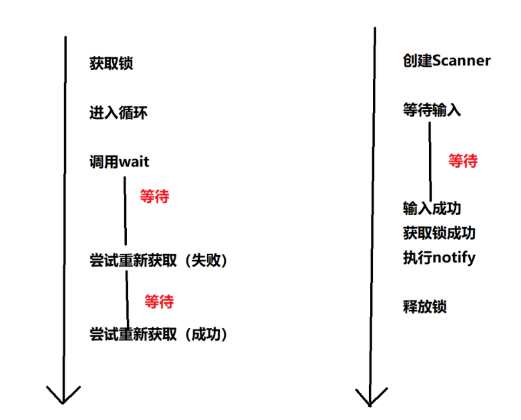
注意:
1、在synchronized中嵌套synchronized
1
2
3
4
5
6
7
8
9
10
11
12
13
14
15
16
17
18
19
20
21
| public static void main(String[] args) {
Object object=new Object();
Thread t=new Thread(){
@Override
public void run() {
synchronized (object){
Scanner scanner=new Scanner(System.in);
System.out.println("输入一个数:");
int a=scanner.nextInt();
System.out.println(a);
synchronized (object){
System.out.println("输入一个数:");
int b=scanner.nextInt();
System.out.println(b);
}
}
}
};
t.start();
}
|
这样看起来像是一个死锁,但是代码不会锁死,sychronized在内部针对这样的情况进行了特殊处理。调用的是操作系统提供的mutex(互斥量)。
加锁操作是调用pthread_mutex_lock函数。
解锁操作调用的是pthread_mutex_unlock函数。
像这种情况,不会真正的执行lock函数,而是仅仅维护一个“引用计数”,第一次进行调用才会调用lock函数,当引用计数减到0时调用unlock函数。
2、竞态条件问题
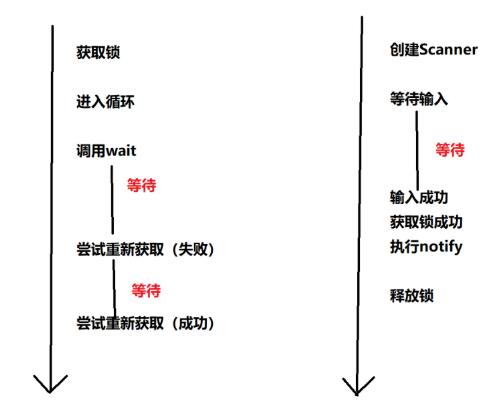
通过这个图我们引发了以下问题,当wait释放锁之后还没有等待通知时,第二个线程发送了通知,第一个线程没有接受到,这是就会出现竞态条件问题,但是java中释放锁和等待通知是具有原子性,两个同时进行,就避免了这种情况的发生。
多线程案例
1、单例模式
单例模式是一种常见的设计模式,应用于代码中有些概念不应该存在多个实例,在这种场景中我们需要用单例模式来解决问题
单例模式分为饿汉模式和懒汉模式两种
饿汉模式:
1
2
3
4
5
6
7
8
9
10
11
12
13
| static class Singleton{
private Singleton(){}
private static Singleton instance=new Singleton();
public static Singleton getInstance(){
return instance;
}
}
public static void main(String[] args) {
Singleton s1=Singleton.getInstance();
Singleton s2=Singleton.getInstance();
System.out.println(s1==s2);
}
|
懒汉模式:
1
2
3
4
5
6
7
8
9
10
| static class Singleton{
private Singleton(){}
private static Singleton instance=null;
public static Singleton getInstance(){
if(instance==null){
instance=new Singleton();
}
return instance;
}
}
|
注意: 懒汉模式和饿汉模式的区别是饿汉模式只要被加载就会创建一个类,而懒汉模式在第一次调用getInstance方法的时候才会被调用。 在这里注意懒汉模式的线程是不安全的,当多个线程同时修改一个变量的时候就会出现问题,饿汉模式的线程是安全的,因为饿汉模式多个线程是在读取一个变量。
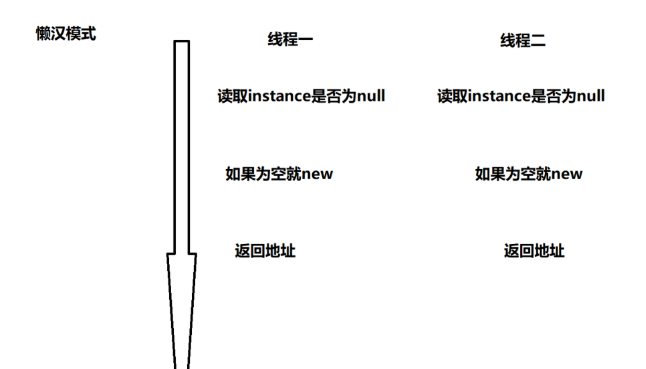
由于上图所示,懒汉模式不安全,我们需要对懒汉模式进行优化。
最终优化结果:
1
2
3
4
5
6
7
8
9
10
11
12
13
14
15
16
17
| static class Singleton{
private Singleton(){}
public volatile static Singleton instance=null;
public static Singleton getInstance(){
if(instance==null){
synchronized (Singleton.class){
if (instance==null){
instance=new Singleton();
}
}
}
return instance;
}
}
|
锁粒度要最小(锁粒度就是锁中包含的代码量)。同时因为多线程操作时,第一个线程写入,其他的线程读出,因此我们需要在变量前加入volatile来修改,避免因为内存可见性而引起的线程不安全
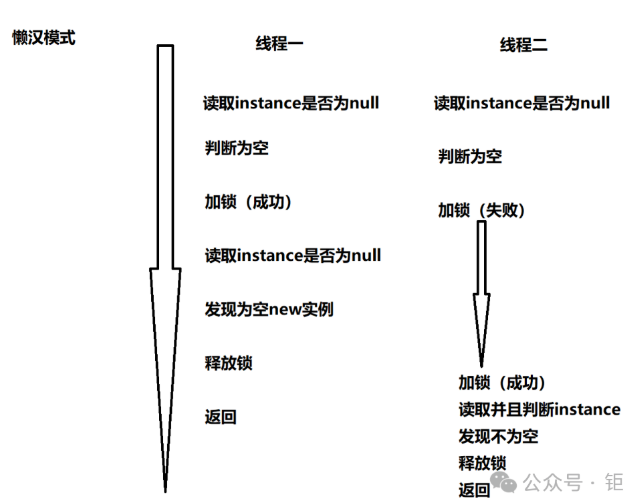
为了保证线程安全最重要的三个点:
1、加锁 保证进程的安全
2、双重if保证效率
3、volatile避免内存可见性带来的问题
2、阻塞式队列
阻塞队列是一种并发编程的方式,是一种生产者消费者模型。
它是一个先进先出的队列:
入队列时发现队列满了,就会阻塞,等待有线程出队列有空位了,才能继续入队列。
出队列时发现队列为空,就会阻塞,等待有线程入队列之后,才能继续出队列。
入队列:
1
2
3
4
5
6
7
8
9
10
11
12
13
14
15
| public void put(int value) throws InterruptedException {
synchronized (this) {
if(size==array.length){
wait();
}
array[tail]=value;
tail++;
if(tail==array.length){
tail=0;
}
size++;
notify();
}
}
|
出队列:
1
2
3
4
5
6
7
8
9
10
11
12
13
14
15
16
17
| public int get() throws InterruptedException {
int temp=-1;
synchronized (this) {
if(size==0){
wait();
}
temp = array[head];
head++;
if(head==array.length){
head=0;
}
size--;
notify();
}
return temp;
}
|
我们通过入队列的wait用出队列中的notify来控制,通过出队列的wait用出队列中的notify来控制。
注意:
当三个线程时(两个线程入队列,一个线程出队列):
如果队列已经满了、两个入队列线程都堵塞
如果出队列被唤醒,其中一个入队列就会被唤醒,继续插入元素。
如果队列已经空了,出队列就会被阻塞,直到两个入队列任何一个插入成功
当我们使用notifyAll时,我们需要用while来搭配使用。
1
2
3
| while (size==array.length){
wait();
}
|
代码解析:
我们通过数组来实现阻塞队列
1
2
3
4
5
6
7
8
9
10
11
12
13
14
15
16
17
18
19
20
21
22
23
24
25
26
27
28
29
30
31
32
33
34
35
36
37
38
39
40
41
42
43
44
45
46
47
48
49
50
51
52
53
54
55
56
57
58
59
60
61
62
63
64
65
66
67
68
69
70
71
72
73
74
75
76
| public class ThreadDome02 {
public static class BlockingQueue{
private int[] array=new int[1000];
private int head=0;
private int tail=0;
private int size=0;
public void put(int value) throws InterruptedException {
           synchronized (this) {
               if(size==array.length){
                   wait();
               }
               array[tail]=value;
               tail++;
               if(tail==array.length){
                   tail=0;
               }
               size++;

               notify();
           }
       }
public int get() throws InterruptedException {
int temp=-1;
synchronized (this) {
if(size==0){
wait();
}
temp = array[head];
head++;
if(head==array.length){
head=0;
}
size--;
notify();
}
return temp;
}
}
public static void main(String[] args) {
BlockingQueue queue=new BlockingQueue();
Thread t1=new Thread(){
@Override
public void run() {
for(int i=0;i<10000;i++){
try {
queue.put(i);
System.out.println("生产"+i);
Thread.sleep(2000);
} catch (InterruptedException e) {
e.printStackTrace();
}
}
}
};
Thread t2=new Thread(){
@Override
public void run() {
while (true) {
try {
int temp=queue.get();
System.out.println("消费"+temp);
} catch (InterruptedException e) {
e.printStackTrace();
}
}
}
};
t1.start();
t2.start();
}
}
|
3、定时器
定时器是是多线程编程的重要组件,当编写好定时器之后,会等到延迟之后的时间进行执行,就像闹钟定时一样。
定时器的构成:
1、使用一个Task类来描述一段逻辑,同时要对执行的时间来进行记录。
2、使用柱塞优先级队列来组织若干跟Task。
3、使用一个扫描进程来进行不断的扫描检测,若需要执行就执行这个任务。
Task类的创建:
1
2
3
4
5
6
7
8
9
10
11
12
13
14
15
16
17
18
19
20
21
| static class Task implements Comparable<Task>{
private Runnable command;
private long time;
public Task(Runnable command, long time) {
this.command = command;
this.time =System.currentTimeMillis()+time;
}
public void run(){
command.run();
}
@Override
public int compareTo(Task o) {
return (int) (this.time-o.time);
}
}
|
阻塞优先级队列:
1
| private PriorityBlockingQueue<Task> queue=new PriorityBlockingQueue<>();
|
对于扫描类的创建和使用:
1
2
3
4
| public Timer(){
Work work=new Work(queue);
work.start();
}
|
1
2
3
4
5
6
7
8
9
10
11
12
13
14
15
16
17
18
19
20
21
22
23
24
| static class Work extends Thread{
private PriorityBlockingQueue<Task> queue=null;
public Work(PriorityBlockingQueue<Task> queue) {
this.queue = queue;
}
@Override
public void run() {
while (true){
try {
Task task=queue.take();
long curTime=System.currentTimeMillis();
if(task.time>curTime){
queue.put(task);
}else{
task.run();
}
} catch (InterruptedException e) {
e.printStackTrace();
}
}
}
}
|
创建一个方法来安排:
1
2
3
4
| public void schenule(Runnable command,long after){
Task task=new Task(command,after);
queue.put(task);
}
|
注意:这样编写会出现忙等的情况,当输入的时间和现在的时间间隔过长时,就会一直扫描,就出现了忙等的情况。
对于这种情况我们使用wait和notify来解决。
1
2
3
4
5
6
7
8
9
10
| if(task.time>curTime){
queue.put(task);
synchronized (mailBox){
mailBox.wait(task.time-curTime);
}
}else{
task.run();
}
|
1
2
3
4
5
6
7
| public void schenule(Runnable command,long after){
Task task=new Task(command,after);
queue.put(task);
synchronized (mailBox){
mailBox.notify();
}
}
|
源代码:
1
2
3
4
5
6
7
8
9
10
11
12
13
14
15
16
17
18
19
20
21
22
23
24
25
26
27
28
29
30
31
32
33
34
35
36
37
38
39
40
41
42
43
44
45
46
47
48
49
50
51
52
53
54
55
56
57
58
59
60
61
62
63
64
65
66
67
68
69
70
71
72
73
74
75
76
77
78
79
80
| public class ThreadDome04 {
static class Task implements Comparable<Task>{
private Runnable command;
private long time;
public Task(Runnable command, long time) {
this.command = command;
this.time =System.currentTimeMillis()+time;
}
public void run(){
command.run();
}
@Override
public int compareTo(Task o) {
return (int) (this.time-o.time);
}
}
static class Work extends Thread{
private PriorityBlockingQueue<Task> queue=null;
private Object mailBox=null;
public Work(PriorityBlockingQueue<Task> queue,Object mailBox) {
this.queue = queue;
this.mailBox=mailBox;
}
@Override
public void run() {
while (true){
try {
Task task=queue.take();
long curTime=System.currentTimeMillis();
if(task.time>curTime){
queue.put(task);
synchronized (mailBox){
mailBox.wait(task.time-curTime);
}
}else{
task.run();
}
} catch (InterruptedException e) {
e.printStackTrace();
}
}
}
}
static class Timer{
private PriorityBlockingQueue<Task> queue=new PriorityBlockingQueue<>();
private Object mailBox=new Object();
public Timer(){
Work work=new Work(queue,mailBox);
work.start();
}
public void schenule(Runnable command,long after){
Task task=new Task(command,after);
queue.put(task);
synchronized (mailBox){
mailBox.notify();
}
}
}
public static void main(String[] args) {
Timer timer=new Timer();
timer.schenule(new Runnable() {
@Override
public void run() {
System.out.println("hehe");
}
},2000);
}
}
|
4、线程池
线程池会包含一些线程,可以让我们直接使用,线程池可以避免频繁创建和销毁线程的开销。
线程池的组成部分:
1、需要有一个类来描述具体线程要做的工作。
2、用一个数据结果来组织任务(队列)。
3、通过一个类来描述工作进程。
4、需要有一个数据结构来组织若干个进程。
1、用一个类来描述工作进程
1
2
3
4
5
6
7
8
9
10
11
12
13
14
15
16
17
18
19
20
21
22
23
24
|
static class Worker extends Thread{
private BlockingQueue<Runnable> queue=null;
public Worker(BlockingQueue<Runnable> queue) {
this.queue = queue;
}
@Override
public void run() {
try {
while (!Thread.currentThread().isInterrupted()){
Runnable command=queue.take();
command.run();
}
} catch (InterruptedException e) {
System.out.println("线程被终止了");
}
}
}
|
2、阻塞队列
1
2
|
private BlockingQueue<Runnable> queue = new LinkedBlockingQueue<>();
|
3、用List中放入线程
1
| private List<Worker> workers = new ArrayList<>();
|
4、编写execute(将一个任务加入到线程池中)和shutdown(销毁线程中的所有线程)方法
1
2
3
4
5
6
7
8
9
10
11
12
13
14
15
16
17
18
19
20
21
22
23
24
|
private static final int maxWorkerCount=10;
public void execute(Runnable command) throws InterruptedException {
if(workers.size()<maxWorkerCount){
Worker worker=new Worker(queue);
worker.start();
workers.add(worker);
}
queue.put(command);
}
public void shutdown() throws InterruptedException {
for(Worker worker:workers){
worker.interrupt();
}
for(Worker worker:workers){
worker.join();
}
}
|
这样基本上所有的基础的东西就写完了,下面是完整代码展示:
1
2
3
4
5
6
7
8
9
10
11
12
13
14
15
16
17
18
19
20
21
22
23
24
25
26
27
28
29
30
31
32
33
34
35
36
37
38
39
40
41
42
43
44
45
46
47
48
49
50
51
52
53
54
55
56
57
58
59
60
61
62
63
64
65
66
67
68
69
70
71
72
73
74
75
76
77
78
79
80
81
82
83
84
85
86
87
88
89
90
91
92
|
package Thread;
import java.util.ArrayList;
import java.util.List;
import java.util.concurrent.BlockingQueue;
import java.util.concurrent.LinkedBlockingQueue;
public class ThreadDome01 {
static class Worker extends Thread{
private int id=0;
private BlockingQueue<Runnable> queue=null;
public Worker(BlockingQueue<Runnable> queue,int id) {
this.queue = queue;
this.id=id;
}
@Override
public void run() {
try {
while (!Thread.currentThread().isInterrupted()){
Runnable command=queue.take();
System.out.println(id + "running、、、");
command.run();
}
} catch (InterruptedException e) {
System.out.println("线程被终止了");
}
}
}
static class MyThreadPoll{
private BlockingQueue<Runnable> queue=new LinkedBlockingQueue<>();
private List<Worker> workers = new ArrayList<>();
private static final int maxWorkerCount=10;
public void execute(Runnable command) throws InterruptedException {
if(workers.size()<maxWorkerCount){
Worker worker=new Worker(queue,workers.size());
worker.start();
workers.add(worker);
}
queue.put(command);
}
public void shutdown() throws InterruptedException {
for(Worker worker:workers){
worker.interrupt();
}
for(Worker worker:workers){
worker.join();
}
}
static class Command implements Runnable{
private int num;
public Command(int num) {
this.num = num;
}
@Override
public void run() {
System.out.println("正在执行任务"+num);
}
}
public static void main(String[] args) throws InterruptedException {
MyThreadPoll pol=new MyThreadPoll();
for(int i=0;i<1000;i++){
pol.execute(new Command(i));
}
Thread.sleep(2000);
pol.shutdown();
System.out.println("被销毁了");
}
}
}
|
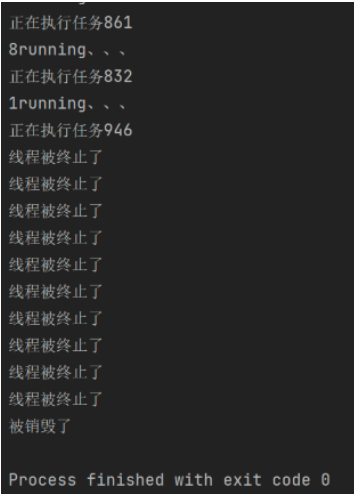
通过结果我们可以看出随着代码的执行,线程开始创建,线程最终被限制在10个,随着线程的终止,线程一个一个的被销毁(在执行任务的过过程中使用哪个线程是不知道的)。
说明:本文是收集参考网络文档,以方便查看(侵删)
信息链接:
- 进程与线程详解
- Java中的进程与线程详解-CSDN博客
=================我是分割线=================
欢迎到公众号来唠嗑:


 微信
微信 支付宝
支付宝